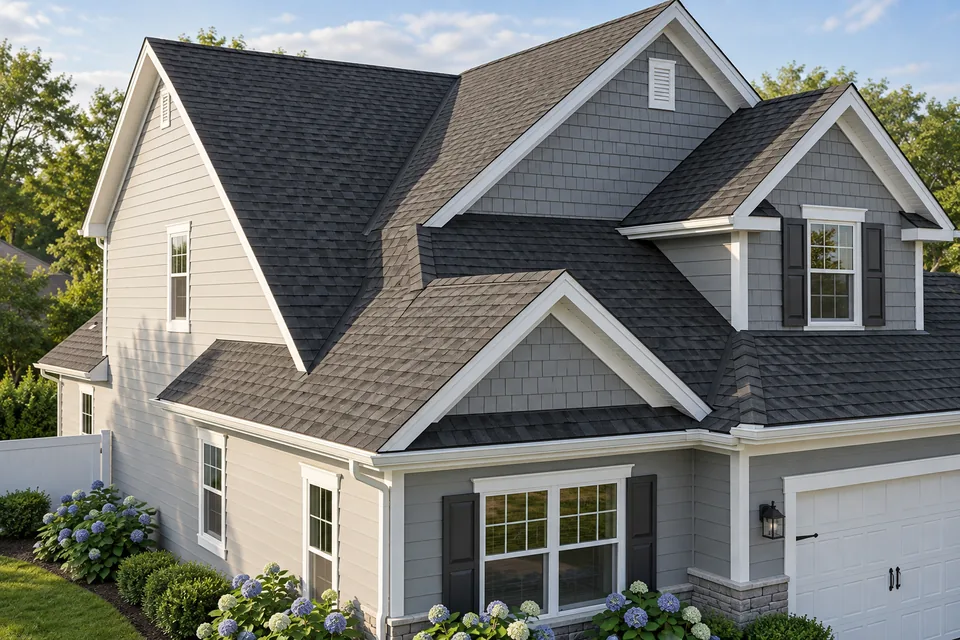
Metal roofing is a roof covering made from steel, aluminum or copper panels or shingles, fastened over the roof deck instead of overlapping asphalt shingles. For homeowners in Annapolis, MD, the appeal is a long service life and strong wind performance; the risk is that a metal roof specified for an inland suburb can corrode early near tidal water. We install metal roofs with that difference built into the specification.
Metal roof installation is one part of the wider work of our roofing company in Annapolis, MD. If you are still deciding between materials, start with our guide to roof replacement in Annapolis, which compares the scope and planning for any new roof.
Types of metal roofing we install
The three common systems look and behave quite differently.
| System | How it is fastened | Best suited to |
|---|---|---|
| Standing seam | Concealed clips inside raised seams, allowing the panels to expand and contract | Main roofs, waterfront homes, modern and historic styles |
| Metal shingles and shakes | Interlocking pieces fastened through hidden flanges | Homes where a traditional shingle, slate or shake look is wanted |
| Exposed-fastener panels | Screws with sealing washers driven through the panel face | Outbuildings, sheds and some porch roofs |
Standing seam is the system most homeowners mean when they ask about a metal roof. Because the fasteners are hidden and the panels can move with temperature changes, it avoids the main maintenance burden of exposed-fastener panels: hundreds of screw washers that eventually need re-tightening or replacing.
Metal roofs near the water
Salt air is the defining issue for metal roofing around Annapolis. Airborne salt settles on the roof, holds moisture and accelerates corrosion, especially at cut edges, scratches and fasteners. Three choices matter most on a waterfront or near-water home:
- Panel material and coating.
Coated steel such as Galvalume is common and cost-effective inland. Aluminum resists salt corrosion better and is often the safer choice close to tidal water. Manufacturers publish distance-from-saltwater limits for their finish warranties, and those limits are worth checking before you choose.
- Compatible metals.
Steel panels, copper flashing and aluminum gutters in contact with each other in salty moisture cause galvanic corrosion. Every fastener, flashing and gutter should be compatible with the panels.
- Edges and trim.
Eaves, rakes and ridge trim take the most wind and the most salt. Hemmed edges and properly fastened trim make a real difference here.
Our Edgewater roofing page explains how salt air and open-water wind affect roof details in general, and the same principles apply to metal.
What a metal roof installation involves
- Inspection and measurement.
We assess the decking, ventilation and any existing leaks, and measure each roof plane, valley and penetration.
- Specification.
You choose the system, material, gauge and finish, and we set out the underlayment, flashing, trim and fastening details in writing.
- Removal or preparation.
Usually a full tear-off so the decking can be checked; occasionally installation over a single sound layer where code and the manufacturer allow it.
- Underlayment and flashing.
A high-temperature underlayment suited to metal, with flashing built around chimneys, walls, skylights and vents.
- Panels and trim.
Panels are installed with room to expand, followed by ridge, eave and rake trim, and snow guards over entrances where sliding snow could be a hazard.
- Walkthrough.
You receive photographs, warranty paperwork and care instructions.
Metal roofing cost considerations
A metal roof usually costs more to install than an asphalt shingle roof of the same size. What moves the price most is the system (standing seam costs more than exposed-fastener panels), the material (aluminum and copper cost more than coated steel), the roof’s complexity and the number of penetrations, and whether the old roof needs to be removed. We price each of those in the written estimate so you can compare bids line by line. Our roof replacement cost guide explains how roof size is measured and how to compare quotes.
Metal roofing in the Historic District
Standing seam and terne-coated metal roofs are part of the historic character of many buildings in downtown Annapolis. Inside the Historic District, existing historic metal roofs are generally expected to be repaired where they remain serviceable, and changing material on a visible slope needs Historic Preservation Commission approval. Our Historic District roofing guide covers how that review works. For older metal roofs that are worn but not failed, a coating may be the right step; see our flat roof and coating page.
Metal roofing for porches, additions and accents
Metal is often used on just part of a house: a porch roof, a bay window, a low-slope addition or a dormer. These small roofs are where metal’s ability to handle low pitches is most useful. If the rest of the house has slate, tile or cedar, a metal accent roof can be a practical, compatible choice; our slate, tile and cedar shake page covers those materials.
Call (410) 348-8473 or use the form on this page to arrange a free inspection and a written metal roofing estimate.