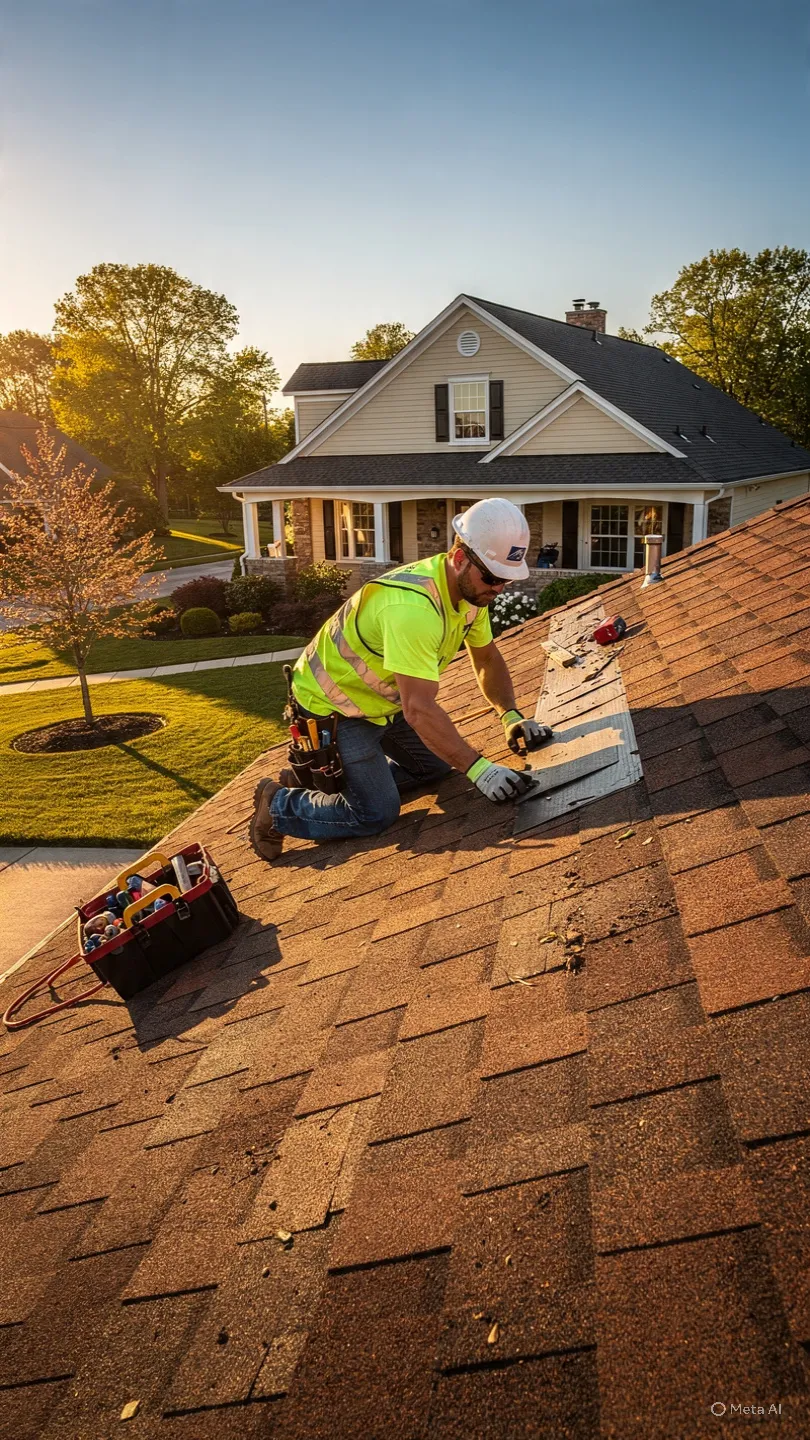
Start with the condition of the home
If a storm has left your roof leaking or visibly damaged, call (410) 348-8473. Tell us whether water is entering now, whether a tree or limb is involved and which parts of the home are affected. We take calls 24/7 for active leaks and discuss the immediate response when you book.
As local Annapolis roofers, we provide storm damage roof repair in Annapolis and nearby Maryland communities, including emergency tarping where the conditions and safe access allow. Temporary protection can reduce further exposure while the permanent repair is planned; it is not the same as completing the roof repair.
If water is coming in, our emergency roof repair team takes calls around the clock. Keep clear of damaged structures, fallen power lines and unsafe roof areas. For an immediate danger, contact emergency services or the relevant utility. You can arrange a roofing assessment without going onto the roof yourself.
Wind, hail and impact damage: what we assess
Different storm effects need different checks. The assessment should distinguish observed damage from possible causes and from older deterioration; the date of a storm alone does not establish what caused every mark on a roof.
- Wind-affected shingles.
Look for missing, displaced or creased roofing and examine nearby areas where access is safe.
- Flashing and penetrations.
Assess displaced or damaged details at roof edges, walls, chimneys and vents that may allow water entry.
- Possible hail damage.
Record visible conditions on shingles and related components without treating every dent or patch of granule loss as proof of a covered loss.
- Tree or debris impact.
Identify the affected area and visible damage, and explain when structural or specialist assessment is needed beyond the roofing scope.
Hail damage inspection, wind damage and ice dams
Hail damage inspection looks beyond the shingles. Dents in gutters, downspouts, vents and flashing help establish that hail actually struck the roof, while bruised or fractured shingles and exposed mat show where it did damage. We photograph both, because soft-metal evidence is what corroborates a hail finding.
Wind damage repair usually starts at the edges, ridges and corners, where uplift is strongest. Creased shingles that have folded back and resealed can look intact from the ground but have lost their seal. We replace damaged shingles and re-secure edges and ridge caps so the next storm does not lift the same area.
Ice dam removal matters in the colder spells Annapolis gets most winters. When heat escaping into the attic melts snow higher on the roof, the water refreezes at the cold eaves and backs up under the shingles. We remove ice dams carefully, without hacking at the ice in a way that damages the shingles, and then look at the cause: attic insulation, air leaks and attic ventilation are the long-term fix.
Weather, roof condition and safe access determine how we inspect. Accessible attic or interior evidence can help explain water entry, but we cannot see every concealed condition beneath the roof covering.
A practical record of the roofing damage
Clear documentation helps you understand the roof and discuss it with your insurer. We provide photographs and written roofing findings, with the proposed work and any inspection limitations explained.
Keep the following together as your project develops:
- The storm date, when you first noticed the issue and your own observations.
- Inspection photographs and a description of the affected roofing details.
- The proposed repair scope, materials and estimate.
- Records of temporary protection, including photographs and receipts.
- Your insurer’s instructions, correspondence and claim reference if one is opened.
Our role is to explain the roof condition and proposed roofing work. We do not decide policy coverage or promise a settlement, and our roofing assessment is not representation as your public adjuster. The Maryland Insurance Administration’s homeowners claims guidance explains the different roles involved in a claim.
From temporary protection to permanent repair
- Discuss the immediate concern.
We ask about active water entry, visible damage and access so the initial response can be planned.
- Assess accessible damage.
Inspect and photograph the roofing conditions we can safely assess, explaining anything that remains concealed or uncertain.
- Document the proposed work.
Separate temporary protection from the permanent repair scope and identify materials, access and related work.
- Coordinate the next step.
Discuss scheduling and any insurer documentation requests with you before permanent work is agreed.
- Complete and review the roofing scope.
Carry out the authorized work, address agreed changes if additional damage is found, and review completion details.
An urgent response does not always mean a permanent repair the same day. Weather, safe access, material availability and the extent of damage affect the plan. We discuss those limits when arranging the work.
Roof insurance claim assistance
We help you prepare the roofing side of a claim: dated photographs, written findings, a repair scope and, where an adjuster visits, the opportunity to walk the roof with them and point out what we documented. We do not negotiate on your behalf or tell you what your policy covers.
Repair scope and insurance coverage are separate
A roofing estimate describes the work proposed for the property. The insurer’s decision addresses what the policy covers and how payment is calculated. Those documents serve different purposes, and one should not be presented as a guarantee of the other.
Notify your insurer promptly and ask what it needs before permanent work begins. Review the policy’s applicable deductible, payment basis and any specific instructions with the insurer. Do not assume all temporary work, matching costs or replacement costs will be reimbursed.
If the scope described by the insurer differs from the roofing findings, ask for the difference to be explained and provide relevant documentation. For questions about claim handling, consult the Maryland Insurance Administration. Our roof insurance guide provides additional background for that conversation.
Targeted repairs or a broader replacement
Storm damage limited to a defined area may be addressed with a targeted repair if the surrounding roof is serviceable and suitable materials are available. The assessment should explain the repair boundary and any limitations, including a visible difference between new and weathered shingles.
More extensive damage, an unworkable repair detail or deterioration across the roof may justify a replacement assessment. The existing roof’s condition matters alongside the storm damage. We explain the roofing options without presenting replacement as an automatic insurance outcome.
Learn about roof repair in Annapolis or roof replacement planning. If gutters or siding were affected too, include them in your initial description so related exterior work can be considered separately.
Help across Annapolis and the surrounding area
We serve Annapolis and nearby Anne Arundel County, including Arnold, Cape St. Claire, Severna Park, Pasadena, Edgewater, Riva, Mayo, Crofton, Gambrills and Davidsonville. There is no travel charge within our listed service area.
When you call, your address, the symptoms and whether the leak is active help us plan the next step. If there is no current leak but you have concerns after a storm, request a roof inspection and we will discuss timing and access.