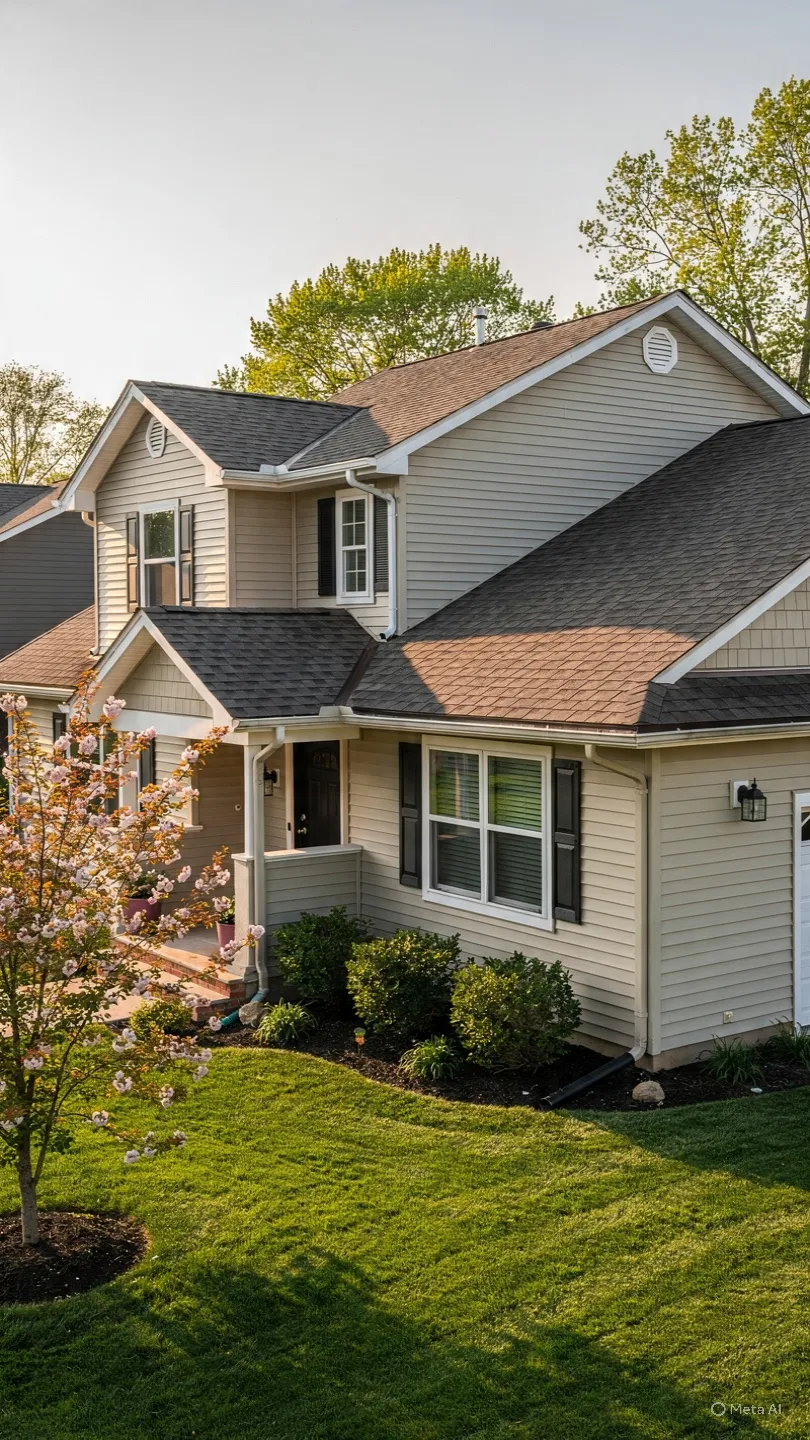
Roofing in Edgewater, MD
Roof replacement in Edgewater, MD built for a waterfront exposure. Salt air, South River wind, Critical Area review and county permits, explained properly.
Get a free roof inspection
Written findings with photographs, and an honest repair-or-replace answer.
Roof replacement in Edgewater, MD is not the same job as roof replacement six miles inland, and the difference isn’t marketing. Edgewater sits on the south bank of the South River, with communities running out toward the Chesapeake at Mayo, Selby-on-the-Bay and Woodland Beach. A large share of the housing stock here sits within a thousand feet of tidal water. That location changes which materials last, which fasteners fail first, and which agency reviews the permit, which is why waterfront homeowners here should not assume that roofing in Annapolis, just across the river, follows identical rules.
What salt air actually does to a roof
Salt air is misunderstood. It does not attack asphalt shingles. The shingle itself is largely indifferent to it. What salt attacks is every piece of metal in the roof assembly, and a roof has far more metal in it than most homeowners realise.
Airborne salt settles on the roof and stays there, held in place by humidity, and it makes water far more electrically conductive than rainwater alone. That accelerates two things:
- Fastener corrosion.
Nails hold the roof down. Electro-galvanised nails, which are perfectly adequate inland, corrode noticeably faster in a marine atmosphere. Hot-dipped galvanised or stainless fasteners cost slightly more per square and last materially longer here.
- Galvanic corrosion between dissimilar metals.
When two different metals sit in contact in the presence of a conductive electrolyte, salt-laden moisture, the less noble metal corrodes preferentially. An aluminium flashing fastened with the wrong nail will consume itself at the contact point. This is the single most common avoidable failure we see on waterfront roofs, and it is entirely a specification problem, not a workmanship one.
Practically, this means the details fail before the field does. Chimney and wall flashing, drip edge, vent collars, gutter fixings and the fasteners themselves reach end of life while the shingles still look fine. A waterfront roof that is specified as if it were inland will often need its details redone years before the roof surface is due.
So when we quote a roof near the water, the fastener and flashing specification is a line item we’ll walk you through. If a competing quote doesn’t mention metals at all, that’s worth asking about.
Wind off open water
The second exposure is wind. A roof facing open water across the South River or toward the Bay takes wind that hasn’t been slowed by trees or neighbouring houses. Uninterrupted fetch means both higher sustained speeds and more turbulence at the roof edge, and roof edges, ridges and corners are where wind uplift concentrates.
Two things matter more here than inland: the shingle’s wind rating, and the nailing pattern used to achieve it. Most architectural shingles reach their headline wind rating only when installed with an enhanced nailing pattern, commonly six nails per shingle rather than four, with specific placement. Installed at four nails, the same shingle carries a much lower rating, and the manufacturer’s warranty reflects that. Starter strips at eaves and rakes, and properly fastened ridge caps, do a disproportionate share of the work.
Does the Critical Area affect a roof replacement?
Usually less than people fear, but it is not nothing, and it’s worth understanding before you’re surprised by it.
Edgewater properties within 1,000 feet of tidal water or tidal wetlands fall inside Maryland’s Chesapeake Bay Critical Area. Within that boundary, private projects, including individual building permits, go through review by the county’s Department of Planning and Zoning (verified against Anne Arundel County guidance, retrieved August 2026).
The reassuring part: Critical Area mitigation obligations are tied to new lot coverage. A straight replacement on the existing footprint creates none, so a like-for-like re-roof does not normally trigger planting or mitigation requirements.
Three things change that answer, and one of them is adding gutters where the house never had them. We work through it in roofing in the Chesapeake Bay Critical Area, which covers the boundary, the 100-foot Buffer and what review actually involves. We’ll tell you at estimate stage whether your scope is a straightforward permit or one that needs planning review.
County permits, not city
A point that trips up Edgewater homeowners regularly: Edgewater is unincorporated, so Anne Arundel County issues your building permit: the City of Annapolis does not, despite being just across the river and despite Annapolis addresses appearing on plenty of nearby mail. County permits are filed through the Land Use Navigator portal.
This matters because a contractor who works mostly inside Annapolis city limits is used to a different permitting system, different fees and a different inspection schedule. Filing in the wrong jurisdiction wastes a week at minimum.
Do you serve waterfront properties?
Yes. Waterfront and near-water work across Edgewater, Mayo, Selby-on-the-Bay, Woodland Beach and the communities along the South and Rhode rivers. Water access affects the job practically as well as technically: narrow lanes in the older beach communities, restricted staging space on tight waterfront lots, and dumpster placement that has to keep a driveway usable. We’d rather look at the site and plan those things than discover them on the morning of the tear-off.
For the full detail on what replacement involves and how it’s priced, see roof replacement. If you have an active leak rather than a replacement to plan, start with roof repair. Not sure whether we cover your address? Our service areas page lists everywhere we work.
Call (410) 348-8473 to book an inspection.
Common questions
Does salt air damage asphalt shingles?
No. The shingle itself is largely indifferent to salt. What salt attacks is every piece of metal in the roof assembly, and a roof has far more metal in it than most homeowners realise. Airborne salt settles and stays, held in place by humidity, making water far more electrically conductive than rainwater alone. The practical result is that the details fail before the field does: flashing, drip edge, vent collars, gutter fixings and the fasteners.
What fasteners should be used on a waterfront roof?
Hot-dipped galvanised or stainless. Electro-galvanised nails are perfectly adequate inland but corrode noticeably faster in a marine atmosphere, and nails are what hold the roof down. The better fasteners cost slightly more per square and last materially longer here. When we quote a roof near the water the fastener and flashing specification is a line item we walk you through; if a competing quote doesn't mention metals at all, ask about it.
What is galvanic corrosion, and why does it matter near the water?
When two different metals sit in contact in the presence of a conductive electrolyte, in this case salt-laden moisture, the less noble metal corrodes preferentially. An aluminium flashing fastened with the wrong nail will consume itself at the contact point. It's the single most common avoidable failure we see on waterfront roofs, and it's entirely a specification problem rather than a workmanship one.
How many nails should each shingle have?
Six rather than four, on an exposed waterfront roof. Most architectural shingles reach their headline wind rating only when installed with an enhanced nailing pattern, commonly six nails per shingle with specific placement; at four nails the same shingle carries a much lower rating and the manufacturer's warranty reflects that. Starter strips at eaves and rakes and properly fastened ridge caps do a disproportionate share of the work.
Do I get my roofing permit from the City of Annapolis?
No. Edgewater is unincorporated, so Anne Arundel County issues your building permit, filed through the Land Use Navigator portal, despite the city being just across the river and Annapolis addresses appearing on plenty of nearby mail. A contractor who works mostly inside city limits is used to a different system, different fees and a different inspection schedule, and filing in the wrong jurisdiction wastes a week at minimum.
Tell us what your roof is doing
We'll tell you honestly whether it needs looking at today, this season, or not yet.
- Written findings and dated photographs, yours to keep
- The honest repair-or-replace answer, even when it's "not yet"
- No pressure, and no sales visit unless you ask for one
Request a callback
We reply the same working day.