Roof replacement in Annapolis, MD means removing the existing roof covering down to the deck, repairing the decking where needed, and installing new underlayment, flashing, ventilation and roofing as one system. It is the right call when a roof is failing across several areas; a single damaged spot usually needs roof repair instead.
Signs you need a new roof
Annapolis roof replacement starts with the condition of the roof you have and the home beneath it. One damaged area does not automatically mean the whole roof needs replacing, but these signs usually point toward a replacement assessment:
- Leaks in more than one place, or leaks that return after repairs.
- Curling, cracked or bare shingles across several slopes, or heavy granule loss in the gutters.
- A sagging or soft roof deck felt underfoot or seen from the attic.
- Daylight or widespread staining on the underside of the decking.
- A roof near the end of its expected life that has started needing frequent repairs.
- Storm damage spread across too much of the roof for a targeted repair.
As a roofing contractor in Annapolis, we base every replacement on a measured scope: roof covering, flashing, ventilation, decking allowances and property access. We explain the findings and proposed work so you can compare an estimate without relying on a headline price.
If the problem is isolated, start with roof leak repair in Annapolis. If a storm caused the damage, our storm damage page explains how roofing documentation fits alongside your insurer’s review.
Asphalt shingle roof replacement
Asphalt shingle roofing is a system of connected details. The visible shingles matter, but so do the layers underneath, the flashing at openings and the way the attic is ventilated. A new surface alone cannot resolve every roof problem.
- Shingle selection.
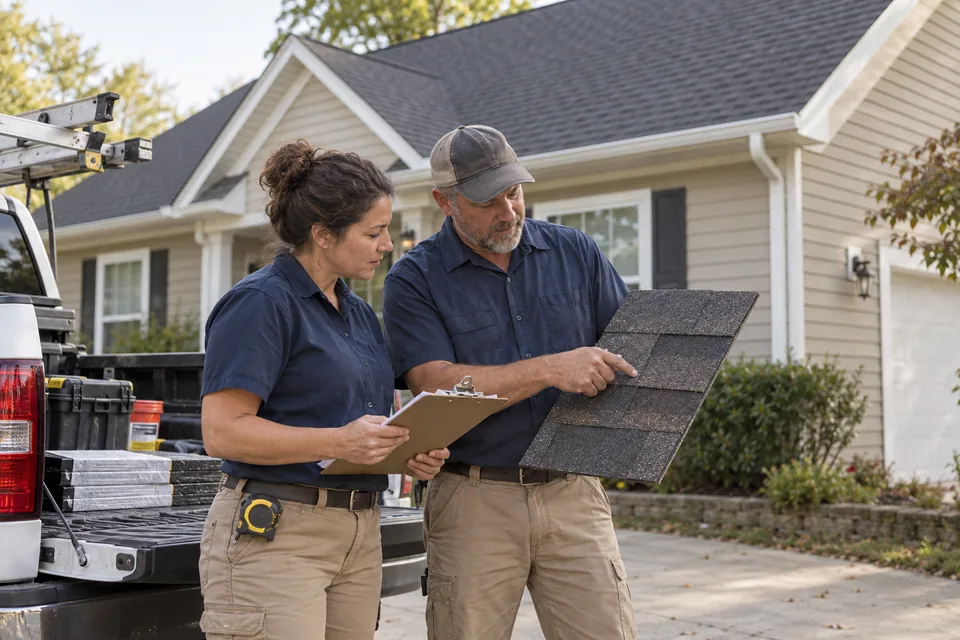
Compare the exact product line, available colors and published installation requirements. Samples help you see how the roof will work with the siding and trim.
- Underlayment and water protection.
Identify the products and planned locations in the estimate, including details at eaves, valleys and penetrations where applicable.
- Flashing and roof edges.
State how chimneys, walls, vents, valleys and edges will be treated, including which existing components will be replaced or retained.
- Ventilation.
Review accessible intake and exhaust conditions together. Any proposed ventilation changes should be described as part of the scope.
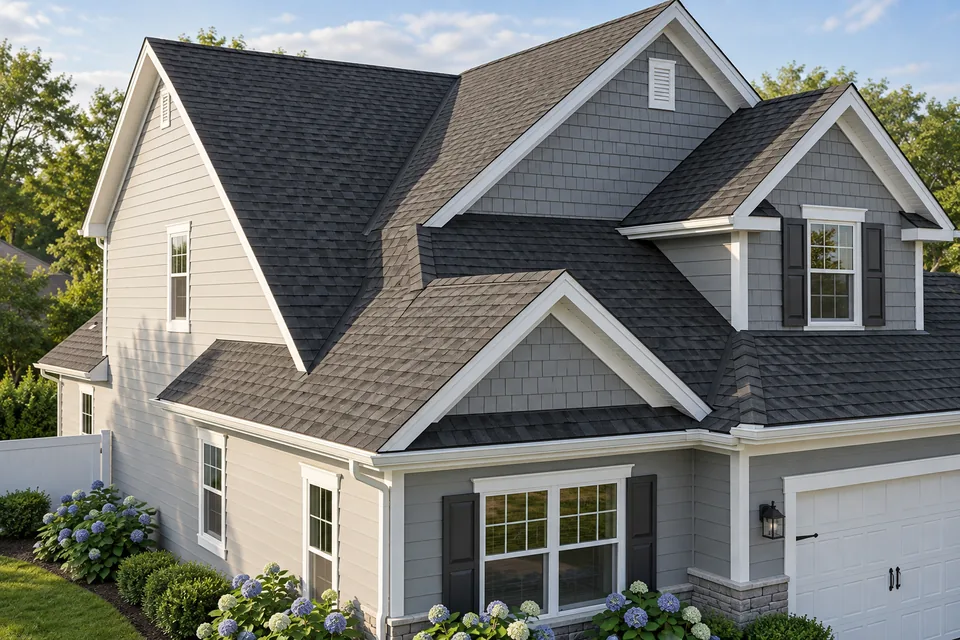
For a steep-slope roof, staging, material handling and access need their own plan. Dormers, intersecting rooflines and limited driveway space also affect the work. Tell us about solar panels, skylights or equipment on the roof before estimating so any coordination can be identified.
If you are considering a different roof material, compare it before you decide. We also install metal roofing, slate, tile and cedar shake roofs and flat roofs in TPO or EPDM. Historic materials or low-slope sections often need a different scope from the main shingle roof.
Attic ventilation installation
A new roof is the best time to fix attic ventilation. Balanced airflow, with intake at the soffits and exhaust at or near the ridge, keeps the attic closer to outdoor temperature. That reduces summer heat build-up that ages shingles, winter condensation on the decking, and the warm-attic conditions that cause ice dams.
As part of a replacement, we can install ridge vents, soffit or edge intake vents and replace damaged roof vents, and we check that insulation is not blocking airflow at the eaves. Shingle manufacturers commonly require adequate ventilation for their warranties, so the ventilation plan belongs in the written scope.
How roof replacement works, step by step
A clear installation plan lets you understand what happens before the old roof is opened and what is checked before the job is finished.
- Inspection and measurement.
Assess the roof, visible moisture concerns and accessible attic conditions. Record the roof areas, details and access requirements.
- Written specification.
Agree on materials, removal, flashing, ventilation, decking allowances, cleanup and warranty terms. Clarify any required approvals before scheduling.
- Preparation and tear-off.
Plan delivery, debris handling and protection around the home. Remove the roofing included in the scope and assess the exposed deck.
- Installation and finishing.
Complete the agreed roof system and details in accordance with applicable installation requirements. Explain any discovered conditions that need a change to the scope.
- Cleanup and review.
Remove project debris, check the work area and review the completed scope and applicable warranty documents with you.
Most single-family asphalt roofs are replaced in a few working days once work starts, though larger or steeper roofs, extra decking repairs and weather can extend that. Before work begins, we discuss access to the driveway, moving vehicles, pets and areas to avoid during construction. Weather and concealed damage can change the sequence; those changes should be communicated rather than left for you to discover.
Roof replacement cost in Annapolis
Roof replacement cost in Annapolis depends mainly on roof size, pitch, the material chosen, how many layers come off, flashing and ventilation work, and how much decking needs replacing. Estimates should be specific enough to compare. Roof size is only part of the price: slope, existing layers, flashing details, removal, access and decking work can all affect the total. We do not turn a statewide average or a small-roof promotion into a quote for your property.
Ask each roofing replacement contractor to identify:
- The measured roof scope and exact shingle product.
- Tear-off, disposal and property-protection arrangements.
- Underlayment, flashing and ventilation work.
- Included decking allowances and the price or process for additional work.
- Permit responsibility where a permit is required.
- Cleanup, completion documentation and payment terms.
- Manufacturer and workmanship warranty coverage and exclusions.
We offer a 10-year workmanship warranty; ask for the written terms applicable to your project. Manufacturer product warranties are separate and depend on the selected products and their terms. Neither should be reduced to a headline number without reviewing what is covered.
For budgeting questions, see our roof replacement cost guide. Your written estimate remains the basis for the proposed work on your home.
Permits and material approvals before work
Permit requirements depend on the property jurisdiction and the work being done. An Annapolis mailing address alone does not identify the issuing authority.
Anne Arundel County’s permit guidance says replacing shingles only does not require a building permit, while replacement involving sheathing and shingles and/or trusses does. For property within city limits, check the City of Annapolis permit review guide for your scope.
Historic District review is a separate consideration. Ask the Historic Preservation Division about exterior changes before committing to materials or work. Our Historic District roofing guide helps you prepare questions. The estimate should identify who is responsible for applicable approvals and fees.
Roof replacement across Annapolis and nearby towns
We plan residential roofing work across Annapolis and the surrounding service area, including Edgewater, Severna Park, Arnold, Crofton and Davidsonville. Roof exposure, access, neighborhood review requirements and the existing building shape are more useful planning details than a one-size-fits-all package.
If you are also considering new siding or gutter replacement, discuss the order of work before signing separate scopes. The roof edge, fascia, siding and drainage connect, and the estimate should make those connections clear.